Podcast: Play in new window | Download
Subscribe: Apple Podcasts | RSS | More
How to Deal with Your Sh*t (so Your Kids Don’t Have to)

Mini Synopsis
In this episode, Dr. Robyn Silverman welcomes back USA Today bestselling author and licensed therapist Eli Harwood for her second visit to the podcast. Together they dig into the emotional baggage, coping habits, and unprocessed feelings that can silently shape how we show up for our kids, and how to start dealing with all of it before it gets between us and them. They explore how to know when your mess is being activated, the 30 to 50 percent rule of good-enough parenting, why repair is not about dominance, dialogue versus monologue, self-talk scripts for hard moments, what children actually learn when they watch us regulate ourselves, and why the two most important words you can give a child are simply: I’m here.
Introduction:
Today we’re talking about what we bring into parenting — the anger, the anxiety, the shame, the stress, the self-doubt, the control habits, the blame patterns, and the old coping mechanisms that can show up in our hardest moments with our kids. This conversation is not about being a perfect parent. It’s about becoming a more aware, accountable, and connected one. It’s about learning how to notice what’s happening inside of us, pause before reacting, repair when we mess up, and show our children that hard feelings and hard moments can be handled with honesty, care, and courage. Because when we deal with our stuff, we change what our children inherit.
Short Bio:
Eli Harwood, MA, LPC, is a licensed therapist, USA Today bestselling author, and attachment educator with more than 19 years of clinical experience helping people process relational trauma and build secure connections with their children. She is the founder of AttachmentNerd.com and the creator of the Secure Parent Program, a virtual community helping parents break cycles and build secure legacies. Eli is the author of Raising Securely Attached Kids and her latest book, How to Deal with Your ____ So Your Kids Don’t Have To: An Encyclopedia for Ditching Your Emotional Baggage, published by Penguin Random House. Endorsed by Dr. Daniel Siegel, Dr. Shefali Tsabary, and other leading voices in child development, the book is organized alphabetically so parents can flip to exactly what they need, when they need it. Eli has been featured across major media and has built a community of over 1.2 million caregivers worldwide. This is her second appearance on How to Talk to Kids about Anything.
Important Messages:
We All Have Baggage. The Goal Is to Know Yours. — Eli Harwood
Everyone has adapted to situations that were less than ideal growing up. Those adaptations became coping mechanisms, and those coping mechanisms became emotional baggage. No passport stamp reads ‘you have arrived, you are now an emotionally mature parent.’ But there are things we can be doing and ways we can be working on our emotional responses that make it easier for our kids to rely on us. Knowing your stuff and working on it enough that it doesn’t get between you and your children — that is the goal.
Your Story Activates in the Room Whether You Know It or Not — Dr. Robyn Silverman
When Dr. Robyn noticed herself getting disproportionately upset at her children for being rude to her husband, she traced it back to losing her own father too early. The grief and longing she carried for him was being triggered by watching her children take their present, engaged dad for granted. The unprocessed story does not stay quiet. It shows up in reactions that feel bigger than the moment and leave us wondering where that came from. The work is tracing the reaction back to the story.
You Only Need to Show Up 30 to 50 Percent of the Time — Eli Harwood
Research shows that if you are able to stay emotionally connected and regulated in a hard moment 30 to 50 percent of the time, your children will register you as someone they can rely on. That is not a B+. In most areas of life, that would be a failing grade. In parenting, it is a success. Parents do not need to be perfect. They need to be present often enough that children feel they have a safe person to return to.
Your Child’s Grouchiness with You Is a Form of Trust — Dr. Robyn Silverman
When children are safe enough to show a parent their full emotional range — including frustration, rudeness, and being prickly — that is not a sign of disrespect. It is a sign of deep trust and secure attachment. Children who feel genuinely safe with a parent do not perform. They show up authentically, which sometimes looks ungrateful or unkind. Understanding that reframes the hardest moments and makes it easier to hold them without taking them personally.
Feelings Are Chemicals. A Hard Day Is a Chemical Day. — Eli Harwood
Emotions are neurochemical events. When you are flooded with norepinephrine again and again, it becomes much harder to pause, stay calm, or respond thoughtfully. This is not a character flaw. It is biology. The internal expectation that a good parent never loses it and stays perpetually calm is not real, and it is not what children need. What they need is a parent who can notice the chaos when it starts to happen internally and know how to cope with it.
Shame Is Never the Truth — Dr. Robyn Silverman
When shame hits — the feeling of I’m bad, I’ve failed, I’m the worst parent — the antidote is not more self-reflection alone. It is connection. Reaching out to someone who knows you, who is compassionate, who is humble, and who can help you find your dignity again — that is what breaks shame’s grip. Shame cannot survive being spoken in the right company. And modeling that for children teaches them to do the same.
Name It to Tame It. Then Pause. — Eli Harwood
Research shows that naming what you are feeling in a difficult moment actually helps reduce cortical firing in the brain. Saying to yourself ‘I am feeling overwhelmed and I want to react, but I can take a pause’ gives the nervous system a moment to settle. The pause is not for thinking. The pause is for breathing. It helps the body sense that it is actually safe — even when the stress response has fired as if there were a threat. Mastering the pause is one of the most important skills a parent can develop.
We Were Never Meant to Parent Alone — Dr. Robyn Silverman
Human beings evolved in communal settings where multiple adults shared the load of raising children. The modern isolated family unit — one or two parents, alone in a home, without a village around them — is a historically unusual arrangement that we were never designed for. When a stranger in a restaurant offers a kind word to a struggling parent, it is not just nice. It is a small act of the village showing up. Becoming that person for other parents is one of the most quietly powerful things we can do.
You Can Have Your Feelings. Don’t Let Your Feelings Have You. — Eli Harwood
If a parent suppresses all emotion and is always fine, fine, fine, children never see how an emotion rises, gets processed, and resolves back into connection. If a parent erupts and wallows without regulating, children learn to parent the parent instead. The healthy middle is: feel the feeling, name it, listen to what it is asking for, meet that need, and come back. That process — witnessed by a child — teaches emotional regulation from the inside out.
Repair Is Not About Who Was Wrong. It’s About Returning to Connection. — Eli Harwood
In homes where a parent had a control or blame habit, apologies were used to assert dominance rather than restore connection. Children from those homes may panic around apologizing as adults because it still feels like submission rather than repair. Real repair is not about assigning fault. It is about saying: something got harmed between us, and I want to return to connection with you. That distinction changes the experience of the apology for both the parent and the child.
Choose Who Gets to Be an Influencer in Your Life — Eli Harwood
Parents are constantly on display and constantly being judged — at pickup, at the grocery store, online, everywhere. Taking in all of that noise indiscriminately is corrosive. Eli has a clear filter: the people who get to genuinely influence her perception of herself and her parenting are people who know her well, who are compassionate, who are well-informed, who are curious, and who are humble. A stranger’s disapproving look at the grocery store does not meet those criteria. Their opinion goes in the trash.
Notable Quotables:
“We all have baggage. We all have stuff. The goal is to know our stuff and to work on it enough that it doesn’t get between us and our kids.”
— Eli Harwood
“I lost my dad way too early. And there they were, being rude to my husband — this amazing, engaged dad who was still here. I realized that’s what was flipping my lid. It took some digging to find that connection, but once I found it, everything made sense.”
— Dr. Robyn Silverman
“If you’re able to stay connected in an emotional moment 30 to 50 percent of the time, your kids will register you as someone they can rely on. That’s a fail in anything else. In parenthood, it’s a success.”
— Eli Harwood
“When our children feel safe enough to show us their full range, the grouchy and the frustrated and the prickly — that’s not disrespect. That’s trust. That’s secure attachment in action.”
— Dr. Robyn Silverman
“The most important thing you’re giving your child is emotional connection. And the two words you want them to sense from you — whether they’re in pain or celebrating or asking a deep question — are: I’m here.”
— Eli Harwood
“There was a woman in the restaurant who came over and said, ‘You are doing such a great job with this child.’ I needed it so badly in that moment. That is what the village looks like now. We become that person for other parents.”
— Dr. Robyn Silverman
“The goal is not to become this, like, evolved Zen doctor parent. That’s not real. It’s to be relationally oriented. To care about connection. And to get really good at repair.”
— Eli Harwood
“When we approach our stuff, and we actually deal with it, you’re going to be feeling better, your kid’s going to be feeling better, and you’re going to feel more connected. That’s the promise. That’s the whole thing.”
— Dr. Robyn Silverman
“Repair is not about I’m the bad guy, and you’re the good guy. It’s about disconnection. I want to return to connection with you and repair whatever got harmed in that interaction.”
— Eli Harwood
“If you name what you’re feeling, it actually helps reduce the cortical firing in your brain. I’m overwhelmed, and I want to react, but I can take a pause. And the pause is not for thinking. The pause is for breathing.”
— Eli Harwood
Resources:
Eli Harwood ↓
-
Website: AttachmentNerd.com
-
Instagram: @attachmentnerd
-
Book: How to Deal with Your Sh*t, So Your Kids Don’t Have To: An Encyclopedia for Ditching Your Emotional Baggage
Dr. Robyn Silverman ↓
- Website: DrRobynSilverman.com
- Podcast: How to Talk to Kids about Anything
- Book: How to Talk to Kids about Anything: Tips, Scripts, Stories, and Steps to Make Even the Toughest Conversations Easier
- Instagram: @dr.robynsilverman
Facebook: Dr. Robyn J.A. Silverman
YouTube: Dr. Robyn Silverman - Bluesky: Dr. Robyn Silverman- Parenting
Turn Small Talks into Big Lessons- FAST.
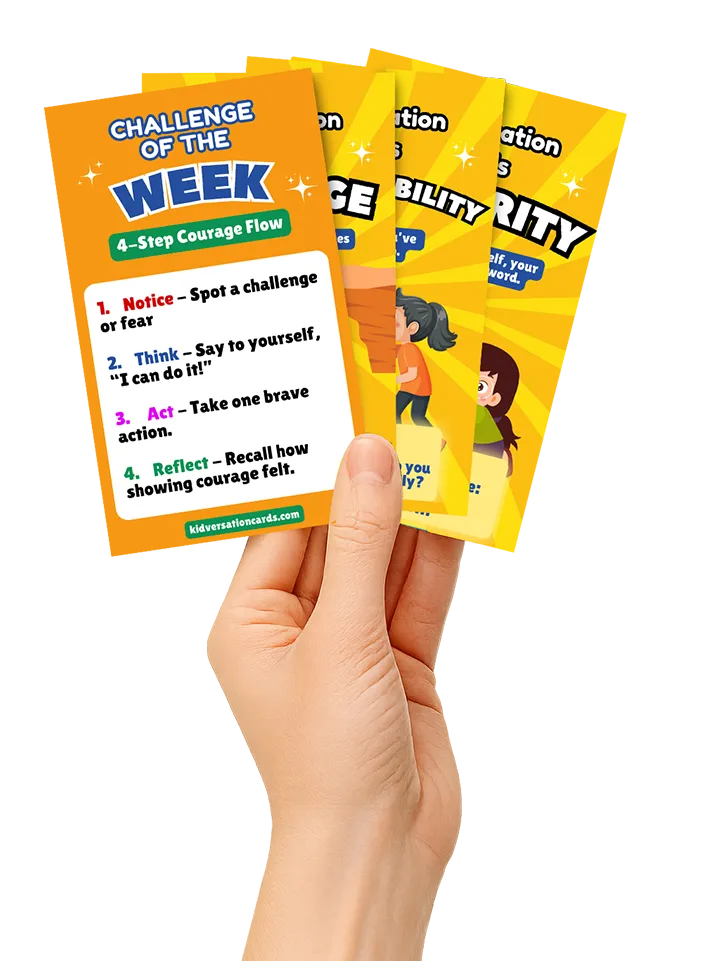
Fun prompts, zero prep, real growth. From courage and kindness to mindset and resilience, each card sparks skills that matter. And the best part? Kids love them. Build character, strengthen connection, and make every moment count—one question at a time.
What Are These Cards?
KIDVERSATION CARDS These aren’t ordinary cards. Created by Child Development Specialist and “Conversation Doc” Dr. Robyn Silverman, Kidversation Cards make meaningful conversation simple. Each one taps into the 6 Cs—Confidence, Competence, Contribution, Caring, Character, and Connection—a proven framework for helping kids thrive. Fun for kids and easy for parents, they spark quick talks that build lasting skills and memories.