
Parents: How Do We Talk to Kids about Fairness?

Do you hear “that’s not fair!” a lot in your home or school? Many children believe that “fair” means “the same.” But often, “the same” is not fair at all. If you can imagine a bunch of different people, all with different needs, wants and interests- we’d never think that we should give them all exactly the same thing! Dividing up the pizza, time, help, snacks or privileges in equal-sized packages, quite simply, does not often make sense. Of course, other times, people should receive “the same” and that is, indeed, the most fair situation.

Fairness is the “Powerful Word of the Month” for Powerful Words this month and is also the topic for my US News & World Report article and infographics for October.

Ask your children what they think of fairness and come up with scenarios the illustrate when fairness means “the same” and when it means “different.” Here are some of the questions you can explore:
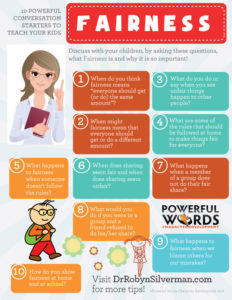
(1) When does fairness mean “the same?”

(2) When does fair mean that everyone should get a “different” amount?

(3) What do yo9u do or say when you see unfair things happen to other people?

(4) What are some of the rules at home that ensures fairness?

(5) What happens to fairness when someone doesn’t follow the rules?

Also, explore some of these talking points I discuss in my US News & World Report article this month:

Talking point No. 1: Discuss people’s varying needs, since fairness is often based on what each person needs to be successful and healthy.

Talking point No. 2: Explain that fairness is sometimes based on desire and interest. Everyone likes different activities, foods, games, colors and books.

Talking point No. 3: Have a conversation about merit, hard work and perseverance. We want to send the message that people who put in the most time and effort often get the largest share.

Talking point No. 4: Talk about fairness and appropriateness. Let your child know that depending on a person’s age, experience and ability, what’s fair may change.

Talking point No. 5: Life, unfortunately, isn’t always fair.

In a quiet moment, talk about what you think is really unfair in life, whether it’s people who are suffering – like a friend who has lost her parent to cancer – or kids who are homeless, or it’s societal inequalities that make life difficult for certain groups of people. This will provide some perspective for your children, while you ask them to take a walk in another person’s shoes. They may even want to find ways to be able to help those in need!

I discuss these fairness talking points in Ask Dr. Robyn this month:

Come up on Facebook or Twitter and let’s discuss it!

Warm regards,



How to Talk to Kids about the Las Vegas Shooting

After the terrible shooting on Sunday, October 2nd, that took place in Las Vegas killing 59 and injuring more that 500 people, parents are left wondering what to say to their children about the Las Vegas shooting. Let’s acknowledge that it’s becoming less rare to wake up to bad news lately- hurricanes, earthquakes and this senseless shooting makes us wonder when the loss of life and destruction is going to end. I get that. Our children are starting to get hear bits and pieces about these tragedies and those who haven’t will likely hear about them in time. So what do we do or say when tragedy strikes?

Resources:

  • I was interviewed for Morning Dose TV on this topic yesterday- right here.
  • Since I wrote something that is fitting when the Barcelona shooting happened– giving both tips and scripts, I’d like to give that to you now, again.
  • On my podcast, Joe Primo and I discussed How to Talk to Kids about Death & Dying if answers around grieving and death are in need.

And just a few quick words on talking to kids when tragedy strikes:

  • Be the first source– let them hear it from you. News sources are abrupt and made for adult audiences- you know best how to talk to your kids. Tell them; “I am here to answer your questions, there is nothing you can’t ask me. I may not know all the answers but I will find out what I don’t know so I can put your fears to rest.” As children get older you can ask, what do you know about this? How do you feel about this? To open up the conversation.
  • Let them know about the helpers who are working to keep everyone safe and assure them that the man responsible for the deadly act is unable to hurt anyone anymore because he is dead. Tell them; “those in law enforcement and the medical community are doing everything they can to keep us safe and take care of anyone who was hurt. Do you know how Aunt Karen takes care of people in the hospital since she’s a nurse? That’s what the people out there are doing too. Lots of people are helping.”
  • Allow them to be the helpers too– ask, how can we help someone who is suffering today? How might we help the kids who are dealing with these strategies. Something therapeutic for anyone of any age is drawing pictures and writing letters to those in Las Vegas who are suffering. They can write thank you notes to law enforcement and medical staff or raise money for a charity. As an adult, you can give blood and talk to your children about why you are doing it.

Read more

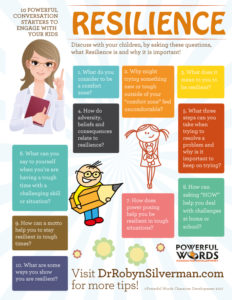
10 Powerful Conversation Starters: How to Talk to Kids about Resilience

From bullying to disasters to the scary happenings we see on the news, raising kids in today’s world can be challenging. It’s easy to see why teachers, parents, coaches and other adults in the lives of children want to shield children from all hardships. Of course, this isn’t possible and over-protecting children and keeping them from experiencing failure isn’t the answer to adversity. What is? Teaching resilience.

Resilience is the ability to “bounce back” from stress, challenge, trauma, failure and adversity. We see it when our kids pick themselves up after they fall and try again. We see it when they study harder, try out again, make the 3rd attempt, and solve problems on their own even though they could take the easy way out. I like to explain it this way:

Think about an elastic band. You can stretch it out, twist it, pull it– and what happens when you stop stretching it? It bounces back. Just like an elastic band, resilience allows us to “bounce back” when we are pulled, stretched, twisted and challenged. Now think of a rubber ball. What happens when you throw that rubber ball down at the floor or at the wall? It bounces back! Just like an elastic band or a rubber ball, resilience allows us to “bounce back” when life gets tough or challenging. We can be like that elastic band or that rubber ball! When life pushes us down…we bounce back up!

Feel free to use the 10 Conversation Starters to help you talk about resilience with the children in your life. The Powerful Word of the Month is resilience for July– but this is a word we can use all year long to help us through anything that pulls us out of our comfort zone or challenges our emotions, frustration level or even physical being. I’m thinking of you every step of the way- and come up onto Facebook so we can discuss all kinds of great topics on Facebook or request to be in the brand new; How to Talk to Kids about Anything private group!

Thank you for being part of our family!

The Seven Silencing Reasons We Don’t Have Tough Conversations with Our Kids

Sex. Death. Porn. Divorce. Conversations like these often make us squirm in our seats– even before we have these talks with our kids. So what happens? We wait. Sometimes we don’t have them at all.

Why don’t we have these tough conversations?

  1. We don’t know what to say: These conversations don’t exactly role off the tongue. Where do we start? How do we explain it? We feel awkward and out-of-our element. Even if we speak with others for a living, conversations with our favorite little humans can challenge us in ways that co-workers, students or someone else’s kids never could.
  2. They are embarrassing, uncomfortable or emotionally charged: Discussions about sex, divorce or death aren’t easy. There is a lot of emotion behind them that come from our own hang-ups, experiences and hot-buttons– sometimes on both sides. It doesn’t help that the more awkward and emotional we feel about them, the more our children tend to react to and absorb those emotions.
  3. We are afraid that we won’t know all the answers: What if our kids ask us something that we simply don’t know how to answer? We worry about feeling unprepared.
  4. These conversations can feel taboo: Are we supposed to be talking about this stuff? After all, in many cases, our parents didn’t talk about it with us. These are words we usually don’t say or speak about in hushed tones– or at least only with our closest friends.
  5. We feel our kids won’t want to discuss them with us: We may think that the kids would rather do something– anything- rather than talking to us about these tough topics. They might think they are weird, embarrassing or totally off-the-charts gross.
  6. We don’t know when to have them: Are our children really old enough to hear this? How do I say it in a way that won’t scare them? How do I say it so that they understand? When do I start these conversations with my kids?
  7. We assume they already know: This is the ultimate way to bury our heads in the sand. Maybe they already know! Someone must have spoken to them about this stuff– maybe even you- and they are all set now because that talk is crossed off your list.

While there are countless reasons why we don’t want to have these key conversations with our kids– there are just as many reasons why we must. Our kids need us to be open and honest with them so that they know they can trust us, ask us anything, come to us when the sh*t hits the fan or when life gets confusing or uncomfortable. It’s time to get comfortable with getting uncomfortable– let’s have these talks and let’s have them often. Today is as good of a day as any.

Need help? We’ve got the tips and scripts you might need right now- I want to help! With the top experts in their area, my podcast, How to Talk to Kids about Anything, gives tips, scripts, stories and steps to make even the toughest conversations easier. More are added each week. And there is no topic we won’t cover.

We’re here– and you’ve got this!

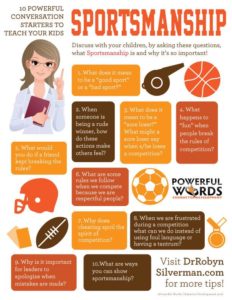
10 Powerful Conversation Starters to Talk to Kids about Sportsmanship

Sportsmanship, showing respect for the rules, the participants and the spirit of competition, is an important powerful word all kids (and adults) must learn when competing with others. Given that May is Sportsmanship month for Powerful Words Character Development, this is a great time to discuss sportsmanship with your children.



How can you start the conversation about sportsmanship with your kids? Here are 10 Conversation Starters that will allow you to teach your kids about sportsmanship– as well as learn what they think, feel and believe about good sportsmanship.

Topics may range from what a good sport or bad sport means to how we can be gracious winners and refrain from being sore losers, to specific issues of cheating, boasting and failing in competition. What are some ways that your children can show great sportsmanship? Why do we need to follow these respect-based rules anyway? How can our actions at a game impact the spirit of competition?

We have all seen terrible sportsmanship- from what we see on TV to what we see on the fields right in front of our faces. What have you seen? What actions do you think are okay and which actions do you feel need to be addressed? When we stay silent, it could look like we approve. And interestingly, your kids may have a great deal to say about what they have seen and heard– it will be great to get their perspective.

What do your kids think? Do you see good or bad sportsmanship around you– and how can your family contribute to the positive end of sportsmanship? Hopefully you are talking about this topic in classes this month with all the scripts and tips from Powerful Words on sportsmanship- we’d love to hear about it!

Feel free to share- and discuss!

Warm regards,

PS A podcast on Sportsmanship will be coming out in the next month or so. Keep a look out and subscribe– so you can be the first to know! You can look right here on the podcast page or subscribe on iTunes (or whatever podcast site you listen through) and I know- you’ll love it!

Double the Fun! Two New Podcasts Out on Empathy and the Death of a Pet

Good morning! Aren’t Tuesdays fun?

For one thing, they aren’t Mondays—and for another, another episode of How to Talk to Kids about Anything is available! And you know what? THIS Tuesday is double the fun because we have TWO episodes available for you as an extra bit of love for you this week.

***First, we have How to Talk to Kids about Empathy and Entitlement by the amazing best-selling author & Today Show contributor, Dr. Michele Borba.

Based on her new book (softcover version out TODAY!), UnSelfie, Michele provides us with outstanding tips and scripts to raise empathetic, caring kids in an “all-about me” world. Michele has traveled widely and studied this topic for years—you don’t want to miss it!

“Once you realize you can nurture empathy, that our children are hardwired for it, you’ll look for dozens of just simple little daily moments to weave it in, take it up, and let your children know it matters. That’s how we produce a better generation of kids: A group of children who are unselfies, who think we, not me.” ~Dr. Michele Borba

***And, as a bonus, for anyone who has a pet or is suffering from pet-loss grief, we have How to Talk to Kids about the Death of a Pet. Best-selling author, Wendy Van de Poll, provides tips to help adults know how to help a child grieve when a pet dies as well as what to say to a child when a pet is sick and death is imminent. She also provides ways to help support a child in moving forward to engage in positive memories to help heal the grief.

The relationships that children have with animals are purely magical.” ~Wendy Van de Poll

You can get any of the podcasts on my website as well as on iTunes, Stitcher and other podcast delivery sites.

I can’t wait to hear what you think! And if you love this episode like I did, it would be so awesome to have you subscribe, rate and review it on iTunes so that others learn all about it. And please, feel free to share it!

Happy Listening!

How to Talk to Kids about Money: Interview with Neale Godfrey

How do we talk to kids about money and financial responsibility? Last week on How to Talk to Kids about Anything, we spoke to Neale Godfrey, author of 27 books that empower families and kids to take charge of their financial lives. (Access through iTunes, my website, or Stitcher, etc).

This episode focuses on talking to kids (and teaching kids) about money. Why is this important? Raising children who understand money is vital to their future financial health, independence and future fiscal behavior! Children and teens need to learn the value of money as well as how to budget, plan, earn, save, invest and give to causes and charities that mean something to them. Money management is a life skill that all children must learn to become responsible, successful adults.

“If you don’t teach your kids about money, their friends will do it…and they’re all bozos!” ~Neale Godfrey

I can’t wait to hear what you think and how you are going to apply it at home or in your school! And if you love this episode like I did, it would be so awesome to have you subscribe, rate and review it on iTunes so that others learn all about it. And please, feel free to share it!

Happy Listening!


Dear friend: Be sweet to yourself

Dear sweet friend,

We can often be so hard on ourselves. Perhaps our inner voice tells us we aren’t good enough, smart enough, good-looking enough, thin enough, driven enough, and countless other “enoughs” we feel we don’t or can’t reach.

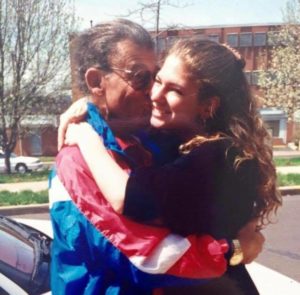
On this day, the 11th anniversary of my dear father’s death, I want you to know that while we can all improve in many ways, you are, indeed, enough. Just as you are.

My father had many faults, as we all do, but today I am remembering his generosity, his patience, his brilliance, his kindness and his love for family. I am thinking about his smile, his gentle eyes, his quiet way and his loving hugs.

Do you know what I am not thinking about? Where he fell short.

So today, be sweet to yourself. See the good in people and allow them to see the good in you. But above all, allow yourself to see the good in you. There is so much. I assure you, there is.

Warmest regards,

Why you MUST let your children fail

What is the gift of failure?

“Really Gift of Failure is…about fostering intrinsic motivation in kids—getting kids to want to do something for the sake of the thing itself.” ~Jessica Lahey, The Gift of Failure

When children don’t have the opportunity to fail when they are young and stakes are low, they don’t have the skills and resilience to bounce back when then they are older and the stakes are higher. They need to develop the systems and attitude that allow them to go after what they want and need without us, as parents and educators, taking over and doing it for them.

But how do we do it and what do we say to our kids about failure? We talk all about this topic on the new episode of How to Talk to Kids about the Gift of Failure with the fabulous best-selling author, Jessica Lahey! Get it on iTunes here or on our website here! Read more

Dr. Robyn on Nightline: What is Elizabeth Thomas’ state of mind at age 15?

I was on Nightline the other night, talking about Elizabeth Thomas and her possible state of mind after being found with her 50-year-old teacher, Tad Cummins.

When a young girl is feeling alone or misunderstood, an older, trusted teacher can be a welcome person in her life. Usually a teacher-student relationship can be a wonderful source of help but clearly this relationship crossed the line and became inappropriate and exploitive. Being a teacher is a unique position of power and intimacy in a child’s life- you are trusted and you have proximity.

Elizabeth is likely in crisis right now. She needs love and understanding from her family and those who love her. This was a cry for help and now, she needs to get the help she needs to become healthy and secure in her life. What was she trying to tell her family? What was going on right before she left? These issues must be addressed as they were the catalyst to the incident.

Nightline: 04/20/17: Missing Student Elizabeth Thomas Found, Teacher Arrested in California Watch Full Episode | 04/20/2017

How is she feeling? Nobody but Elizabeth knows for sure. But I would venture to guess that Elizabeth is likely feeling confused right now. This is someone she has trusted for a long time and likely believed was working in her best interest- this is not likely someone she saw as a criminal or inappropriate. So being taken away from him actually may feel like a loss for her- a loss of someone she trusted so much that she left her life with him. I imagine she is feeling many things right now so it’s time for some understanding and patience as she gets the help she needs.

*Now that child abuse charges have surfaced regarding Elizabeth Thomas’ mother, this adds and important layer to why Elizabeth left, why she got attached to her teacher in the first place, and why she seemed unhappy or reluctant to come back to her life in Tennessee. This girl needs patience, time and help– and it seems that her family will also need support in order for everyone to get back on track.